StartupNews · Breaking News
How to Grow a Business in 2026: 5 Proven Strategies You Can Implement Today
If you have recently typed "how to grow a business" into a search bar, you are not alone. It is a query searched hundreds of thousands of times every single month by founders who have hit a revenue ceiling and are looking for a breakthrough.
By StartupNews · Published · Updated
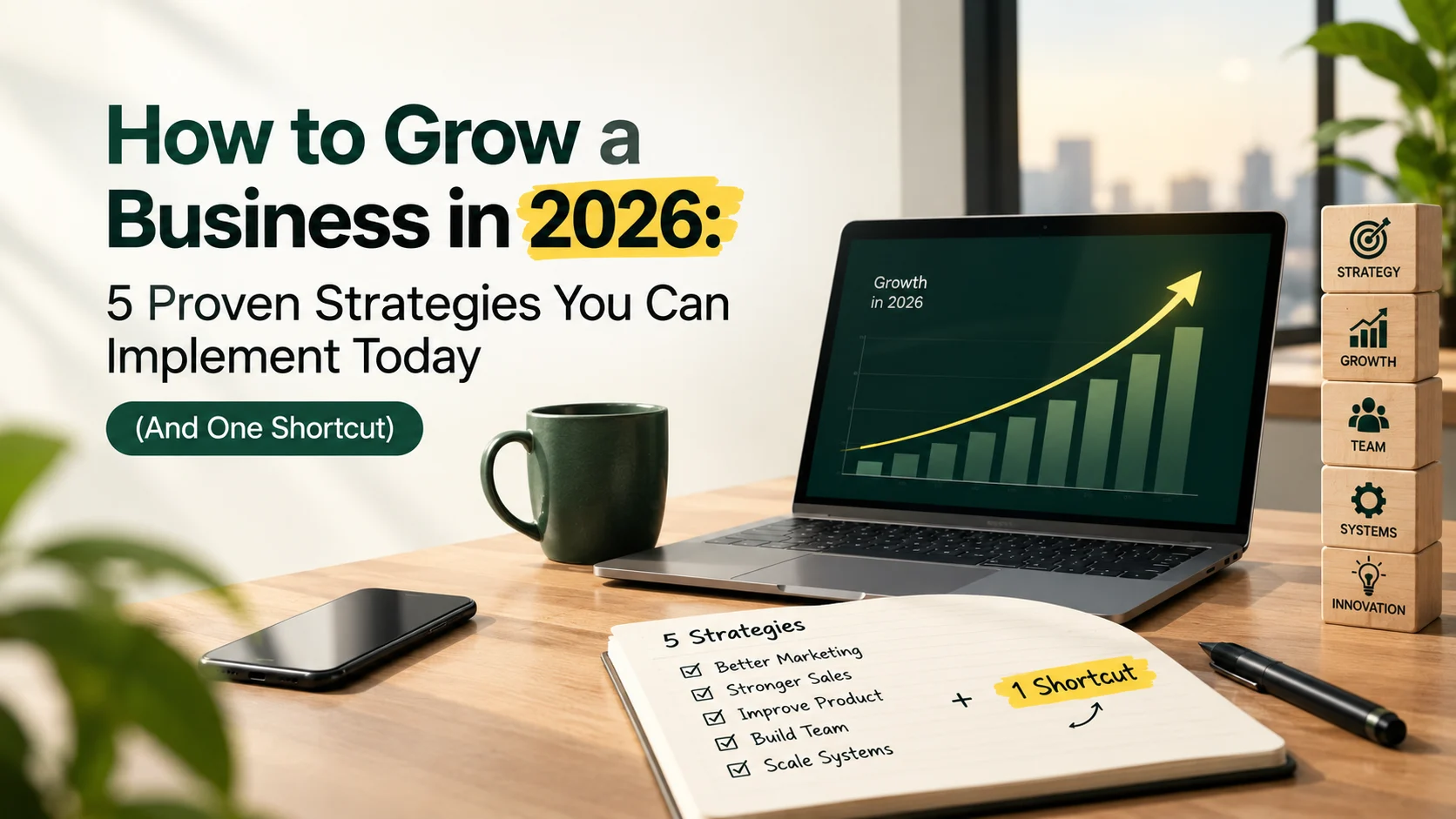
Growth isn't simply about working harder or pushing your team to the brink of burnout. It is about engineering a predictable system that works for you. Whether you are running a local service company, an e-commerce brand, or a B2B enterprise, scaling requires a shift from day-to-day operations to strategic execution. The digital landscape in 2026 demands more than just a functional website and a few boosted social media posts.
Here is the five-step blueprint to scale your operations this year.
1. Master Your Search Real Estate (SEO)
Your potential customers are already looking for the exact services you provide. The only question is whether they find you or your competitors. Relying purely on referrals limits your growth to the size of your immediate network.
To break out, you need to dominate search engines. Start by optimizing your website architecture, fixing broken links, and submitting clean XML sitemaps to Google Search Console. Target high-intent, long-tail keywords that your ideal customers are searching for. When you own your search real estate, your website becomes an automated lead-generation machine that works around the clock without demanding a monthly ad budget.
2. Deploy Data-Driven Digital Advertising
Many businesses waste their marketing budgets on vanity metrics—likes, shares, and impressions—that look good on a PDF report but fail to pay the bills.
True growth requires data-driven media buying. By configuring targeted Google Search campaigns and Meta ads, you can put your brand directly in front of buyers with high purchase intent. Focus on strict conversion tracking, refine your negative keyword lists, and closely monitor your Customer Acquisition Cost (CAC) against your Customer Lifetime Value (LTV). When your ads are properly targeted, every rupee you invest should come back with friends.
3. Build a High-Converting Web Presence
Your website is not an online brochure; it is your best 24/7 salesperson. If your site is slow, difficult to navigate on mobile, or lacks clear calls to action, you are actively driving traffic into the arms of your competitors.
Audit your website's user experience. Ensure that your header menus are intuitive, your page speeds are optimized, and your value proposition is immediately clear above the fold. A conversion-focused web presence reduces your overall acquisition costs because it turns a much higher percentage of clicks into paying customers.
4. Leverage Multi-Channel E-Commerce Growth
If you sell products online, relying on a single storefront is a bottleneck. Scaling in 2026 means meeting your customers exactly where they prefer to shop.
For brands selling directly to consumers (D2C), this means simultaneously optimizing your standalone website while maximizing your visibility on major marketplaces like Amazon and Flipkart. Sync your catalog, aggressively pursue verified buyer reviews, and utilize marketplace advertising to push your listings to the top of the search results. Expanding your digital footprint across multiple platforms instantly multiplies your revenue potential.
5. Cultivate Retention and Reputation
The most expensive customer you will ever acquire is a new one. Businesses that scale successfully focus just as much energy on retention as they do on acquisition.
Build automated post-purchase workflows that encourage your satisfied customers to leave positive feedback. A strong online reputation directly influences ad conversion rates—when potential buyers see hundreds of glowing reviews, the friction to purchase disappears. Additionally, keep your audience engaged through consistent, value-driven content across LinkedIn, Instagram, and email newsletters to turn one-time buyers into loyal, repeat clients.
The Ultimate Shortcut to Scaling
Implementing these five strategies will fundamentally transform your company's trajectory. However, auditing SEO, structuring ad campaigns, and optimizing web performance takes relentless focus and deep technical expertise—time you might prefer to spend actually running and refining your business.
That is exactly why we built Peak Marketing.
We exist for one reason: to turn your marketing spend into measurable revenue. We don't sell activity; we sell outcomes. Our team combines data-driven media buying, conversion-focused website development, e-commerce marketplace management, and reputation strategy into one cohesive system.
If you are ready to scale but don't want to navigate the complexities of digital growth alone, we can engineer that system for you. Visit Peak Marketing to explore our case studies and book a free digital marketing consultation. Let's scale together.