StartupNews · Markets
Federal Reserve Holds Rates at 3.50%–3.75% in Divided 9-3 Vote Under Chairman Warsh
The FOMC paused for a fifth consecutive meeting amid sticky inflation and geopolitical oil shocks, though three regional presidents pushed for an immediate quarter-point hike.
By Startup news · Published · Updated
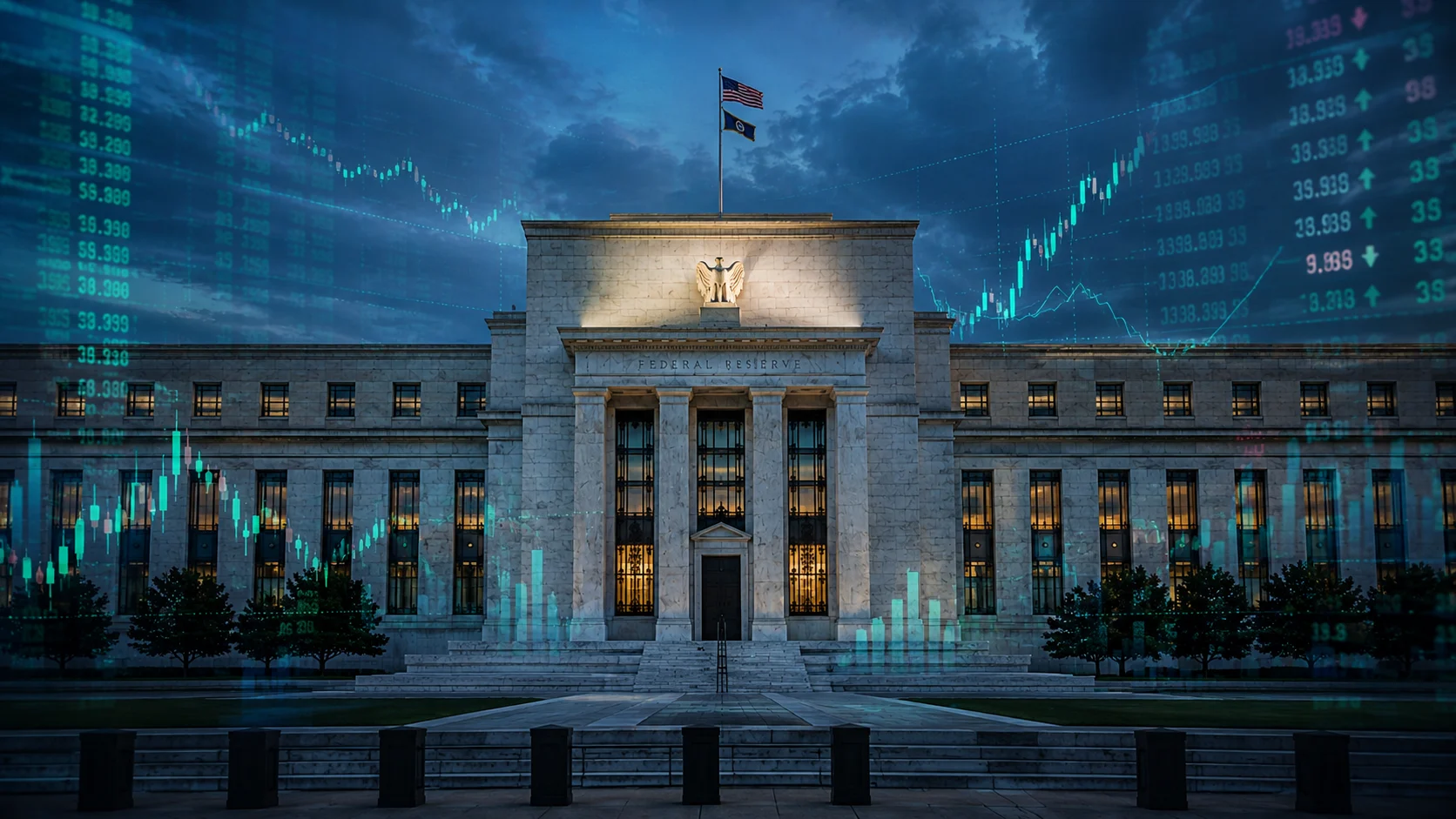
The Federal Reserve on Wednesday held its benchmark interest rate steady at a target range of 3.50% to 3.75%, extending a pause that has now stretched across five consecutive policy meetings. But the surface-level continuity masked what several economists described as the most contentious Federal Open Market Committee gathering in years. Three regional Fed presidents broke ranks and voted for an immediate quarter-point hike, delivering Chairman Kevin Warsh the largest dissent bloc of his young tenure and exposing a committee that is anything but united on how to handle an inflation picture that refuses to fully cooperate.
The 9-3 vote, announced at 2 p.m. ET following a two-day meeting, keeps borrowing costs at their current elevated plateau even as fresh data show headline inflation cooling faster than expected, oil markets whipsawing on Middle East tensions, and financial markets growing increasingly uneasy about where policy goes from here. For a central bank under new leadership, it was a meeting that raised as many questions as it answered.
Key Numbers at a Glance
Fed funds target range: Held at 3.50%–3.75%, unchanged for a fifth straight meeting
Vote: 9-3, with Hammack, Kashkari, and Logan dissenting in favor of a 25 basis point hike
June annual CPI: 3.5%, down from 4.2% in May
June core CPI: 2.6% annually, down from 2.9%
June core PCE (Fed's preferred gauge): 3.3% annually, still well above the 2% target
Market reaction: Dow down more than 1,150 points; Nasdaq nearing a 10% correction from its June high
Next decision: September 15-16 FOMC meeting
Inside the 9-3 Split
The headline number, a 9-3 vote to hold, undersells how fractured the committee has become. The three dissenters, Cleveland Fed President Beth Hammack, Minneapolis Fed President Neel Kashkari, and Dallas Fed President Lorie Logan, all pushed for a 25 basis point increase rather than another hold. According to the post-meeting statement, the dissenting trio said they would have preferred to raise the target range at this meeting, a formal break from consensus that is relatively rare in modern Fed history.
Three simultaneous dissents from a single meeting is a notable event. It marks the first time in years that the committee has split so visibly, and it comes at a moment when Chairman Warsh has explicitly tried to reduce how much the Fed telegraphs about its next move. The dissent count matters because it signals genuine, unresolved disagreement about the inflation trajectory rather than a single outlier casting a symbolic vote.
Notably absent from the dissent column was Governor Christopher Waller, who has publicly flagged concerns about inflation risk in recent weeks and suggested that higher rates could become necessary if price pressures fail to ease further. Despite that public hawkishness, Waller ultimately voted with the majority to hold. His decision to stay in the consensus camp, despite voicing concerns that align philosophically with the three dissenters, suggests the committee's center of gravity is still willing to give the recent inflation data more time to develop before acting. It also underscores how close the vote could have been under slightly different circumstances, and how much the composition of future FOMC meetings, including rotating regional bank votes, could shift the balance.
The committee's own economic projections, updated at the June meeting, had already penciled in one additional quarter-point rate increase before the end of 2026. That backdrop makes the current pause less a statement that hikes are off the table and more a signal that policymakers want additional confirmation before pulling the trigger. The disagreement, in other words, is not about direction so much as about timing.
The Path That Led Here
To understand why Wednesday's hold felt so consequential, it helps to trace the road the Fed has traveled to get to this point. After an aggressive tightening cycle earlier in the decade aimed at taming pandemic-era inflation, the committee pivoted to a series of rate cuts through late 2024 and into 2025 as price pressures appeared to be coming under control. That easing cycle brought the federal funds rate down from its peak before stalling out at the current 3.50% to 3.75% range, where it has now sat, unmoved, through the first seven months of 2026.
The effective federal funds rate, the actual overnight rate that banks trade at within that target range, has hovered around 3.6% for months, reflecting a policy stance that is neither aggressively restrictive nor meaningfully accommodative. That in-between positioning is itself a product of the committee's internal disagreement: hawks see it as still too loose given inflation running well above target, while the more cautious wing of the committee sees it as roughly appropriate given slowing but still-present price pressures and a labor market that, while resilient, is no longer running especially hot.
Five consecutive holds is a long stretch by recent standards. It reflects a committee that spent the back half of 2025 and the first half of 2026 essentially waiting, watching inflation data oscillate between encouraging and concerning without ever delivering the kind of sustained, broad-based improvement that would justify either a return to cutting or a resumption of hikes. Wednesday's meeting did not break that pattern of waiting, but it did reveal, more clearly than any meeting before it, just how close the committee is to abandoning that patience altogether.
How Rare Is a Triple Dissent?
Multiple simultaneous dissents are uncommon enough at the Fed that each instance tends to draw significant scrutiny from Fed watchers and financial historians. For most of the past two decades, FOMC decisions have been overwhelmingly unanimous or featured, at most, a single dissenting vote. Two or more dissents in the same meeting typically signal a committee wrestling with a genuinely close call rather than one where a single official simply holds an outlier view.
Three dissents, all pushing in the same direction and all from sitting regional bank presidents rather than Washington-based governors, is a stronger signal still. It suggests the disagreement is not isolated to a single school of thought within the Fed but is shared across multiple regional economies, Cleveland, Minneapolis, and Dallas, each of which brings a distinct read on regional labor markets, energy exposure, and financial conditions to the table. Dallas, in particular, has meaningful exposure to the energy sector, which may partly explain Logan's discomfort with resting easy on an energy-driven inflation improvement that could prove temporary.
For markets, a triple dissent complicates the usual exercise of reading FOMC decisions as a single, coherent signal. Instead of one message, investors are left parsing at least two: the majority's message that patience remains warranted, and a vocal minority's message that the window for preemptive action may be closing. Reconciling those two narratives, especially under a chairman who has pledged to say less rather than more, is a big part of what made Wednesday's session so turbulent for stocks and bonds alike.
Wall Street's Verdict: Stocks Slide, Yields Diverge
Markets did not take the news well, even though a hold was the broadly expected outcome heading into the meeting. Investors had been positioning defensively for days, and the confirmation of a divided committee, paired with a notably terse post-meeting statement and a press conference that offered little in the way of forward guidance, was enough to trigger a sharp afternoon selloff.
The Dow Jones Industrial Average tumbled more than 1,150 points, a decline of roughly 2.2%, marking its worst single-day performance since April 2025. The S&P 500 fell about 1.5%, while the tech-heavy Nasdaq Composite dropped nearly 1.75%, pulling the index to within striking distance of a formal correction, generally defined as a 10% pullback from a recent peak. The Nasdaq has now shed close to 10% since setting a record high in early June, and Wednesday's decline pushed it firmly toward that threshold.
Bond markets told a more nuanced story. The 10-year Treasury yield climbed roughly 5 basis points to just above 4.65%, reflecting investor concern that the Fed may be forced to stay restrictive for longer given persistent price pressures. The 30-year Treasury yield rose even more sharply, adding roughly 9 basis points to trade above 5.19%, its highest level in months. Meanwhile, the shorter-dated 2-year yield, which is more sensitive to near-term Fed policy expectations, actually slipped about 4 basis points. That divergence, long-end yields rising while short-end yields fell, is a classic signal that traders are pricing in near-term policy stability but growing more uncertain about the Fed's ability to bring inflation fully under control over a longer horizon.
The trading pattern itself was telling. Stocks had already been sliding into the 2 p.m. decision, with the Dow down roughly 1.5% shortly before the announcement. Markets briefly attempted to recover during Warsh's press conference before sliding again into the close, suggesting investors initially searched for reassurance in his remarks and came away disappointed. Warsh has been candid that he intends to break from the practice, common under his predecessor Jerome Powell, of offering markets extensive forward guidance about the likely path of rates. For a market accustomed to parsing every Fed word for hints about the next move, that shift in communication style is itself becoming a source of volatility.
The Inflation Puzzle: Cooling Headline, Sticky Core
The rate decision arrived against a genuinely improving, if still complicated, inflation backdrop. The Bureau of Labor Statistics reported that the Consumer Price Index fell 0.4% in June on a seasonally adjusted basis, the largest one-month decline since April 2020. That pulled the annual inflation rate down to 3.5%, from 4.2% in May, marking the first deceleration in five months after inflation had climbed to its highest level since 2023.
The improvement was driven almost entirely by energy. The energy index dropped 5.7% for the month, its steepest monthly decline in over six years, with gasoline prices falling more than 9% and fuel oil sliding by a similar margin. On an annual basis, energy costs were still up sharply, but the deceleration from a 23.5% annual pace in May to 15.7% in June was significant. That drop tracked closely with easing tensions between the United States and Iran, which had been driving crude prices higher for much of the spring and early summer.
Core inflation, which strips out volatile food and energy components and is generally seen as a better gauge of underlying price trends, also cooled. The annual core CPI rate eased to 2.6% from 2.9% the prior month, coming in below the 2.8% economists had forecast. On a monthly basis, core prices were flat, well below expectations for a 0.2% increase. Declines in auto insurance, wireless phone service, and hotel pricing all weighed on the core reading, alongside a notable moderation in shelter costs, which rose just 0.1% for the month after months of stickier increases.
Shelter has been one of the most stubborn categories in this inflation cycle, so a month of modest, well-behaved shelter data carries outsized significance for policymakers trying to gauge whether disinflation is broadening beyond energy or remains a one-off driven by geopolitics. Warsh himself was careful not to declare victory. Asked directly whether the improved reading meant the inflation fight was essentially over, he pushed back firmly, telling reporters that framing the data as "mission accomplished" was not his view.
The Fed's preferred inflation gauge, the personal consumption expenditures price index, told a similar but slightly less encouraging story. Headline PCE inflation eased to 3.7% year-over-year in June from 4.1% in May, while core PCE, which excludes food and energy, ticked down to 3.3% from 3.4%. Both readings came in roughly in line with economist expectations, but the more modest improvement in core PCE compared with the sharper core CPI decline highlights a nuance that is likely shaping internal FOMC debate: the two measures weight housing, healthcare, and financial services differently, and by the Fed's preferred yardstick, underlying inflation is easing far more gradually than the CPI headline suggests.
Taken together, the data present the committee with a genuine dilemma. Headline inflation is falling fast, largely because of an energy shock unwinding. Core inflation is improving too, but PCE, the Fed's own preferred measure, remains stuck well above the 2% target, at a level that has now persisted for more than five years running. That gap between a reassuring headline number and a stubborn underlying trend is precisely the kind of ambiguity that produces a split vote.
Oil, Iran, and the Geopolitical Wildcard
Much of the recent volatility in both inflation data and financial markets traces back to the Middle East. Tensions between the United States and Iran flared for much of the spring and summer, driving crude oil prices sharply higher and feeding directly into the energy component of consumer inflation. West Texas Intermediate crude entered the Fed's July meeting week trading in the mid-$80s per barrel, still up more than 20% for the month even after a pullback, reflecting how quickly the geopolitical risk premium had built into energy markets.
Reports of a fragile understanding between Washington and Tehran to pause strikes helped ease some of that pressure heading into the CPI release, and that de-escalation is widely credited with the sharp energy-driven improvement in the June inflation data. But analysts covering the region caution that the situation remains unresolved. Shipping risk through the Strait of Hormuz, a critical chokepoint for global oil transit, and continued disruption in the Red Sea mean energy markets remain one headline away from another spike. A senior market analyst covering the conflict noted that any setback in the fragile negotiations could send crude prices sharply higher again, undoing much of the recent disinflationary progress in a matter of weeks.
This geopolitical fragility is central to understanding why three regional Fed presidents wanted to hike preemptively rather than wait. Their argument, in essence, is that the committee should not read too much into a single month of energy-driven disinflation that could reverse itself the moment the Iran situation deteriorates again. If oil prices snap back toward their earlier highs, the improvement in headline CPI could evaporate almost as quickly as it appeared, leaving the Fed further behind the curve than if it had acted preemptively in July.
There is also a global demand dimension worth watching heading into the second half of the year. Economists have flagged that hospitality and travel-related pricing, including hotel and airfare costs, could see renewed upward pressure tied to increased international travel demand around global sporting events later this year, adding another variable to an already complicated services inflation picture.
The Warsh Doctrine: A Different Kind of Fed
Wednesday's meeting was only the second under Chairman Warsh, but a distinct leadership style is already taking shape. Warsh, who previously served as a Federal Reserve governor from 2006 through 2011 before returning this year to lead the central bank, has been explicit about wanting to reduce the amount of forward guidance the Fed provides to markets. That represents a philosophical break from the approach favored by his predecessor, Jerome Powell, and by Powell's own predecessors going back more than a decade, during which detailed guidance about the likely path of rates became a standard tool of Fed communication.
The post-meeting statement itself reflected that shift. It was notably shorter than statements had become under the prior chair, consistent with what one prominent economist described as a more parsimonious approach to the information the Fed chooses to share publicly. Warsh has gone as far as forming five internal task forces dedicated to reworking how the Fed communicates with markets and the public, an unusually structured effort to overhaul decades of institutional practice around Fed messaging.
The rationale, as Warsh has articulated it in recent congressional testimony and public remarks, is that excessive guidance can itself become a source of market distortion, effectively locking the committee into a pre-announced path regardless of how incoming data evolves. He has also suggested that tightening financial conditions in markets, driven by higher long-term yields and a more cautious equity backdrop, are already doing some of the Fed's tightening work for it, reducing the need for the committee to spell out its intentions in advance.
That approach carries real risk. Markets built an entire trading playbook around parsing Fed dot plots, press conference language, and speech transcripts for hints about the future path of rates. Removing that scaffolding without a clear replacement creates a vacuum that traders are, for now, filling with anxiety rather than confidence, a dynamic that likely contributed to Wednesday's stock selloff. Investors who might once have found reassurance in a chair's carefully calibrated hints about future policy instead got a chairman who has made a virtue of withholding exactly that kind of signal.
On substance, Warsh has struck a hawkish tone even while presiding over a hold. He has repeatedly stressed the importance of restoring price stability during his Capitol Hill appearances and has described inflation as fundamentally "a choice" policymakers can control through sufficiently disciplined policy. At Wednesday's press conference, he reiterated that the central bank has essentially no tolerance for inflation remaining elevated, language that reads as considerably more hawkish than the underlying decision to hold rates might otherwise suggest.
The political reaction to Warsh's early tenure has been notably supportive from the White House, a contrast to the friction that periodically characterized the relationship between the administration and the previous Fed chair. National Economic Council Director Kevin Hassett has publicly praised Warsh's stewardship of the central bank, expressing strong confidence in his approach and describing his early performance in glowing terms. That kind of public backing from a senior economic official is unusual so early in a Fed chair's tenure and reflects the fact that Warsh was viewed, going into the role, as more closely aligned with the administration's preference for lower rates than his predecessor had been.
That alignment makes Wednesday's outcome somewhat notable in its own right. Despite entering the chairmanship with a reputation for favoring a faster path toward rate cuts, Warsh has instead presided over two consecutive holds and adopted rhetoric on inflation that reads as more hawkish, not less, than markets initially expected. Whether that reflects a genuine recalibration of his views once inside the building, or simply a pragmatic response to a committee and an inflation backdrop that would not support cuts regardless of who was chairing it, is a question Fed watchers are likely to debate for months to come.
Behind the Dissent: Why Three Presidents Wanted to Hike
The three dissenting voices, Hammack, Kashkari, and Logan, represent three of the twelve regional Federal Reserve banks, and their shared concern centers on the persistence of above-target inflation. By several measures, inflation has now run above the Fed's 2% goal for more than five years, an unusually long stretch that has begun to test the credibility of the Fed's inflation-fighting commitment in the eyes of some officials.
Their argument for hiking now, rather than waiting for further confirmation, rests on a few pillars. First, the recent improvement in headline inflation is heavily concentrated in energy, a notoriously volatile category that is directly exposed to a Middle East conflict that remains unresolved. Second, core PCE, the Fed's preferred underlying inflation gauge, is still running more than a full percentage point above target, with only gradual improvement. Third, waiting for additional data risks a repeat of the pattern that has defined much of the past two years, where the committee consistently found reasons to delay decisive action while inflation remained sticky.
Asked directly about facing down three dissents in his second meeting as chair, Warsh appeared unbothered, telling reporters he had wanted a real debate among his colleagues and that he had gotten exactly that. It is a notable posture for a new chairman: rather than treating dissent as a sign of weakness or a threat to his authority, Warsh has framed vigorous internal disagreement as a feature of the kind of Fed he wants to run, one less inclined toward manufactured consensus and more willing to let genuine policy disagreements play out in public view.
Whether that approach proves sustainable may depend on how the data breaks between now and September. If core inflation continues to improve and the Iran situation stays contained, the hawkish dissenters may find themselves increasingly isolated. If energy prices reverse or core inflation stalls, Warsh could find the committee's center of gravity shifting toward the dissenters' position, potentially setting up a hike as soon as the next meeting.
The Real-World Cost of a Fifth Straight Hold
For households and businesses, the practical consequence of five consecutive holds is that borrowing costs remain firmly elevated across the economy. Mortgage rates have stayed close to the mid-6% range for much of the year, a level that continues to weigh on home affordability and has kept existing-home sales activity subdued relative to pre-2022 norms. Credit card rates, small business lending costs, and auto loan rates have all remained pinned near multi-year highs as a direct consequence of the federal funds rate sitting in its current elevated band.
The personal savings rate has also been drifting lower, falling to 2.7% in June from 2.8% in May and down substantially from a peak above 5% in early 2025. A declining savings rate alongside elevated borrowing costs suggests households are increasingly leaning on current income, and in some cases credit, to sustain spending, a dynamic the Fed will be watching closely as a potential early warning sign of consumer strain. Weaker bargaining power among workers, a trend several market strategists have pointed to in recent commentary, has also limited the wage growth that might otherwise help households absorb higher borrowing costs.
For the corporate sector, the picture is more mixed. Companies with strong balance sheets and limited near-term refinancing needs have largely weathered the higher-rate environment, but smaller and more leveraged firms continue to face a meaningfully higher cost of capital than they did through most of the 2010s and early 2020s. That divergence has shown up in credit markets, where spreads on lower-rated corporate debt have been more volatile than investment-grade debt through this stretch of Fed policy uncertainty.
Sector by Sector: Who Feels a Fifth Hold Most
Not every corner of the economy experiences a prolonged rate plateau the same way. A closer look at where the pain and the relief are concentrated helps explain why the debate inside the Fed is so difficult to resolve cleanly:
Housing and homebuilders: Elevated mortgage rates have kept a lid on existing-home turnover, with many current homeowners reluctant to give up mortgages locked in at far lower rates. Homebuilders have partly offset that drag through rate buydowns and incentives, but affordability remains stretched in most major metro markets.
Regional and community banks: A higher-for-longer rate environment has generally supported net interest margins for lenders, though it has also kept a lid on loan demand from rate-sensitive borrowers, particularly in commercial real estate.
Big tech and AI infrastructure spending: Companies funding massive capital expenditure programs around AI data centers and chip capacity have continued to spend aggressively even amid elevated borrowing costs, largely because much of that spending is funded from cash flow rather than new debt, insulating it somewhat from the Fed's stance.
Small and mid-sized businesses: This segment remains the most exposed to the current rate environment, facing a meaningfully higher cost of capital for expansion, inventory financing, and refinancing of existing debt compared with the low-rate years of the previous decade.
Consumers and household budgets: With credit card rates and auto loan rates still elevated and the personal savings rate drifting lower, household finances are increasingly squeezed at the margin, even as headline inflation cools.
This uneven distribution of pain is part of why a single interest rate decision generates such varied reactions across markets. Equity investors focused on rate-sensitive small caps read Wednesday's hold very differently than bondholders focused on long-duration Treasury exposure, and both groups read it differently still from homebuyers watching mortgage applications for any sign of relief.
What Comes Next: September and Jackson Hole
The committee's next scheduled decision comes at the September 15-16 meeting, with the rate announcement due on the second day. Between now and then, two events loom large for markets trying to anticipate the Fed's next move. The Bureau of Labor Statistics is scheduled to release the July Consumer Price Index report on August 12, which will offer the first real test of whether June's sharp energy-driven disinflation was a durable trend or a one-month anomaly tied to a temporary lull in the Iran conflict.
Before that, Warsh is expected to speak at the Federal Reserve Bank of Kansas City's annual Jackson Hole Economic Policy Symposium in August, an event that has historically served as a venue for Fed chairs to signal significant shifts in policy thinking. Given Warsh's stated aversion to forward guidance, however, many economists expect him to use the Wyoming gathering more cautiously than his predecessors did, declining to offer the kind of explicit signaling that markets have come to expect from that stage.
Several economists covering the Fed believe the September meeting represents a more meaningful decision point than July did. If the July inflation data confirms the broader disinflationary trend, and particularly if core measures continue to soften, the case for holding through year-end strengthens considerably. If the Iran ceasefire breaks down or core inflation reaccelerates, the three July dissenters may find themselves joined by additional colleagues in September, materially raising the odds of a rate hike before year-end, a scenario the committee's own June projections already flagged as a possibility.
How Analysts and Investors Are Reading the Decision
Reaction from the investment community was mixed but leaned toward validating the Fed's caution even as markets sold off. One senior investment strategist at a major wealth management firm said his team agreed with the decision to hold, arguing that despite the lack of unanimity, the committee simply did not yet have enough information to justify tightening policy, a view he said the majority of the committee ultimately shared. That same strategist noted that a combination of limited wage growth leverage for workers and an expectation that the U.S.-Iran conflict will not escalate further supports a Fed on hold through the remainder of 2026.
Not all market commentary was reassuring. An investment analyst at a retail trading platform observed that the in-line June PCE report failed to show the same degree of cooling that the CPI report had revealed two weeks earlier, a discrepancy that he suggested investors may ultimately look past but that nonetheless complicates the disinflation narrative. That kind of divergence between the two major inflation gauges is exactly the sort of ambiguity that tends to keep a data-dependent Fed cautious rather than decisive in either direction.
Economists at Moody's Analytics, meanwhile, focused less on the rate decision itself and more on what it revealed about the Fed's evolving communication posture under Warsh. Moody's chief economist characterized the reaffirmed, unchanged policy statement as consistent with a Fed that intends to share less information with markets going forward, reinforcing the broader theme that this is a central bank still in the process of redefining its own operating playbook under new leadership.
Analysis: A Fed Caught Between Two Truths
Strip away the market noise, and Wednesday's decision reflects a genuine and defensible tension at the heart of current U.S. monetary policy. On one hand, the freshest available data show inflation cooling meaningfully, with headline CPI posting its steepest monthly drop in over six years and core CPI easing back toward the mid-2% range. By that read, the case for a near-term hike looks weak, and the committee's decision to hold looks not just reasonable but conservative.
On the other hand, that improvement rests heavily on an energy price decline tied to a geopolitical de-escalation that could reverse with a single headline out of the Middle East. Strip out energy, and the underlying inflation picture, particularly by the Fed's preferred PCE gauge, still shows price growth running well above target after more than five years of persistently elevated readings. That is precisely the argument the three dissenting regional presidents made, and it is not an unreasonable one.
What makes this moment distinct from prior Fed pauses is the leadership context. Warsh inherited a committee accustomed to detailed guidance and is deliberately withholding it, even as he presides over a genuinely divided vote. That combination, less communication paired with more visible disagreement, is a difficult one for markets to price. Investors who might once have looked to a chair's press conference for reassurance about the path ahead are instead getting a chairman who has made withholding that reassurance a matter of policy principle. The result, at least in Wednesday's trading session, was a market that reacted not to the decision itself, which was widely anticipated, but to the uncertainty surrounding what comes after it.
The next six weeks will likely determine which read of the data proves correct. A clean July CPI report showing core inflation continuing to soften would validate the majority's patience and likely cement another hold in September. A reversal in energy prices tied to renewed Iran tensions, or a core inflation reading that stalls or reaccelerates, would strengthen the dissenters' hand considerably and could set up the first rate hike of the Warsh era as soon as the fall.
The Bottom Line
The Federal Reserve's decision to hold rates at 3.50% to 3.75% for a fifth consecutive meeting was, on its face, the expected and cautious choice. But the 9-3 vote beneath that headline number tells a more urgent story: a central bank under new leadership that is genuinely split on how much benefit of the doubt to give an inflation improvement built substantially on a fragile geopolitical truce. With Chairman Warsh deliberately dialing back the forward guidance markets have relied on for over a decade, investors are being asked to navigate the next six weeks with fewer signals than usual, right as the underlying data, and the war in the Middle East that is shaping it, remain anything but settled. The July Consumer Price Index report on August 12, Warsh's remarks at Jackson Hole, and the state of the U.S.-Iran ceasefire will together determine whether September brings a sixth consecutive hold or the Fed's first rate hike in years.